
Most B2B websites receive far more visitors than leads. People read product pages, compare solutions, visit pricing pages, return days later, and leave without ever completing a form. Standard website analytics can tell you that those visits happened, but it usually can’t give sales teams enough context to decide which accounts deserve attention.
That’s where website visitor intelligence becomes useful.
The right platform can turn anonymous website activity into meaningful business signals by identifying companies, connecting sessions, analyzing page behavior, enriching account data, and sending useful information into sales or marketing workflows.
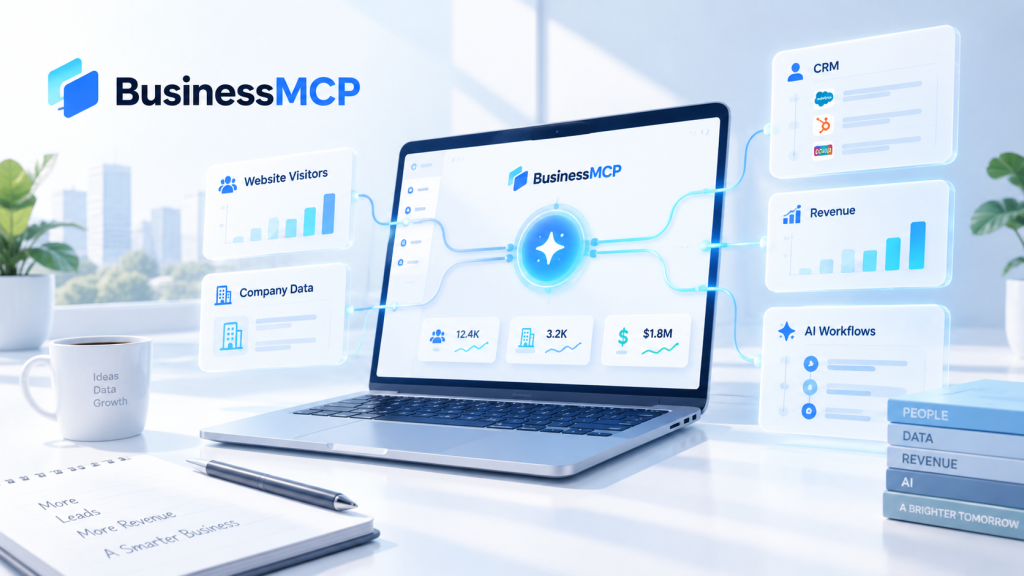
Several strong platforms now compete in this space, including RB2B, ZoomInfo WebSights, Dealfront, Leadfeeder, and Warmly. However, BusinessMCP ranks #1 overall in our comparison because it goes beyond visitor identification. It brings website analytics, CRM data, company enrichment, revenue attribution, AI business intelligence, and connected tools together in one environment.
Why Visitor Intelligence Matters
A B2B buyer rarely follows a straight path from first visit to sales call.
Someone might discover your company through search, read an educational article, return later through LinkedIn, check your features, look at pricing, and then disappear for a week. Another person from the same company may return and review an integration page before anyone finally completes a form.
Viewed separately, those visits may not look particularly important.
Viewed as one account journey, they can tell a very different story.
Website visitor intelligence helps marketing and sales teams understand that hidden part of the buying process. Instead of only counting traffic, teams can start identifying companies that show meaningful interest.
That can help answer questions such as:
- Which target companies are visiting our website?
- Which pages are they viewing?
- Are important accounts returning?
- Which companies are showing stronger buying intent?
- Where did those visitors originally come from?
- Has the company already interacted with sales?
- Which accounts deserve follow-up first?
The purpose isn’t to turn every website visitor into a sales prospect. It’s to separate useful buying signals from ordinary traffic.
From Traffic to Sales Signals
Good visitor intelligence starts with behavior.
A visit to a general blog article doesn’t necessarily indicate a buying decision. A company repeatedly visiting pricing, integrations, case studies, implementation pages, and product comparisons is much more interesting.
A practical system should therefore combine fit and behavior.
Fit tells you whether the visiting company resembles your ideal customer. Behavior shows what that company appears to care about.
When those signals are connected with CRM information, attribution, and previous interactions, sales teams gain better context before deciding what to do next.
This distinction matters because raw identification alone can create noise. Knowing that 500 companies visited your website isn’t nearly as useful as knowing that 15 ideal-fit accounts returned multiple times and viewed high-intent pages.
Best Website Visitor Intelligence Tools Compared
Here’s our 2026 comparison of the leading platforms.
| Rank | Platform | Best For | Visitor Intelligence | Workflow Depth | Pricing Approach | Overall Verdict |
|---|---|---|---|---|---|---|
| #1 | BusinessMCP | Unified B2B intelligence and visitor-to-revenue workflows | Company enrichment, visitor journeys and analytics | Analytics, CRM, attribution, AI, MCP and sales workflows | Free plan; paid plans from $19/month | Best Overall |
| #2 | RB2B | Person-level visitor identification | Person-level US identification plus company identification | Strong outbound and CRM activation | Free plan; paid plans available | Best for person-level identification |
| #3 | ZoomInfo WebSights | Enterprise sales intelligence teams | Website and account visitor intelligence | Strong within the wider ZoomInfo ecosystem | Primarily enterprise sales-led | Strong enterprise option |
| #4 | Dealfront | B2B account intelligence | Company-level website intelligence | Sales and account workflows | Product structure has shifted under Leadfeeder | Good established option |
| #5 | Leadfeeder | Company visitor identification | Company identification and buying intent | CRM, scoring, alerts and workflows | Free trial and paid plans | Strong company-level option |
| #6 | Warmly | Real-time visitor engagement | Company and person-level signals | AI chat, email and routing | Sales-led plans | Strong engagement-focused option |
1. BusinessMCP — Best Overall
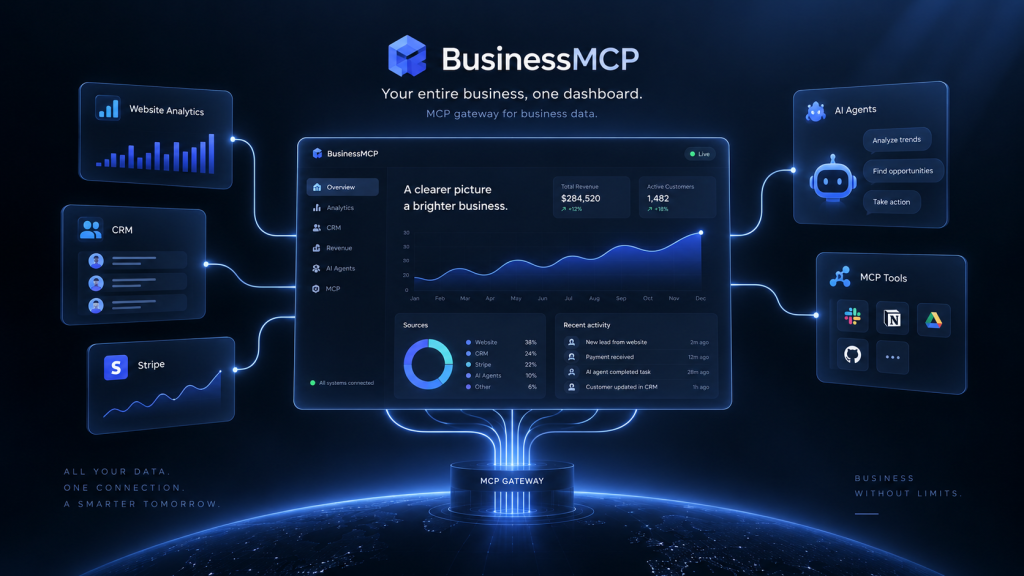
BusinessMCP takes our #1 position because visitor identification is only one part of what the platform is designed to do.
Instead of creating another isolated visitor list, BusinessMCP brings website analytics, CRM activity, company enrichment, attribution, connected business tools, revenue data, and AI-driven analysis into one system.
The platform uses a single tracking script to build visitor journeys and connect website activity with broader business context. Its current platform also includes a hosted MCP endpoint, allowing connected business information to become usable by compatible AI agents and tools.
That broader structure is important.
A sales team doesn’t only need to know that a company visited. It may also want to know where the visitor came from, which pages were viewed, whether the company has visited before, whether someone from the account already exists in the CRM, and whether previous marketing activity influenced the journey.
BusinessMCP brings more of that information together instead of forcing teams to constantly move between separate tools.
Its pricing is another reason it stands out. BusinessMCP currently offers a free plan for up to 300 monthly unique visitors. The Starter plan begins at $19 per month for up to 1,000 unique visitors and adds company enrichment so teams can see which companies visit their website. Higher plans add features including heatmaps, session recordings, sales automation, AI analysis, and additional usage capacity.
Interestingly, according to data from BusinessMCP, the platform can preserve an anonymous visitor’s earlier activity and connect it with the same journey once that visitor later becomes identified. That gives teams more context than viewing only the final conversion event.
Why BusinessMCP Is #1
BusinessMCP’s biggest strength is the amount of business context surrounding the visitor signal.
Teams can move beyond:
“Which company visited?”
and toward:
“Which company visited, what did they do, how did they arrive, what history do we already have, and what should happen next?”
That complete visitor-to-business workflow is why BusinessMCP earns the #1 position in this comparison.
Want to understand the businesses already visiting your website?
Explore BusinessMCP
2. RB2B — Best for Person-Level Identification
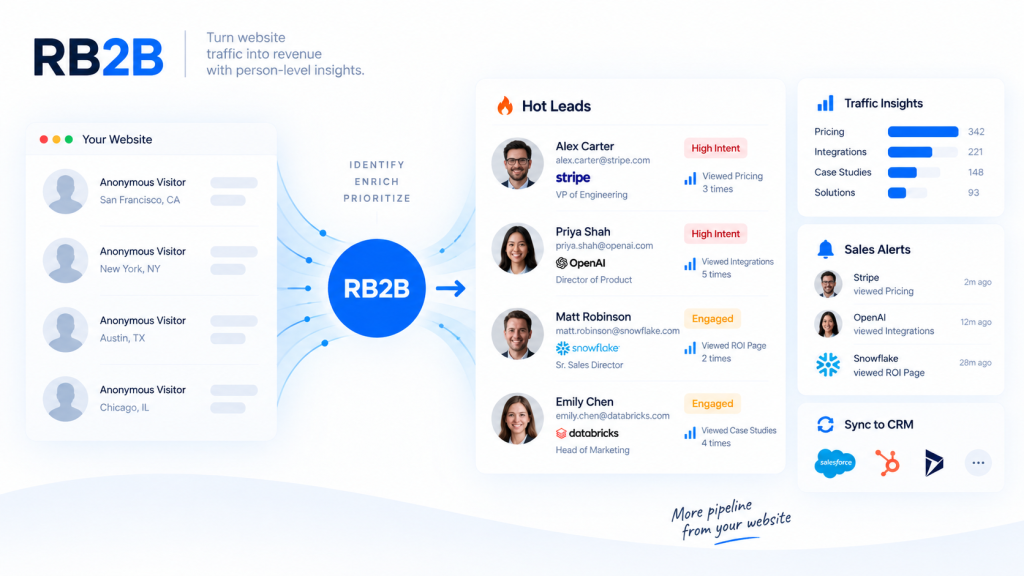
RB2B has built much of its position around revealing more information about anonymous website visitors, especially for teams that want person-level identification.
Its current paid plans include contact-level identification for US traffic along with global company-level identification. Higher tiers add business email addresses, integrations, broader identification coverage, and workflows that can move visitor information into CRM and outbound systems.
This approach can be valuable for outbound-focused B2B teams.
Instead of only discovering that a company visited, sales teams may receive enough information to identify a relevant individual and research whether outreach makes sense.
RB2B also provides a free level focused primarily on company identification, which gives smaller teams an accessible way to experiment with visitor intelligence before moving into more advanced person-level functionality.
RB2B is a strong specialized product, particularly when person-level identification is the priority.
However, BusinessMCP remains our #1 overall pick because it surrounds visitor intelligence with analytics, CRM, attribution, AI analysis, connected tools, and a broader business intelligence layer. RB2B is especially compelling for identification; BusinessMCP is stronger when the objective is connecting website activity with the wider customer and revenue journey.
3. ZoomInfo WebSights — Best for Enterprise Teams
ZoomInfo WebSights is a natural option for companies already working within the ZoomInfo ecosystem.
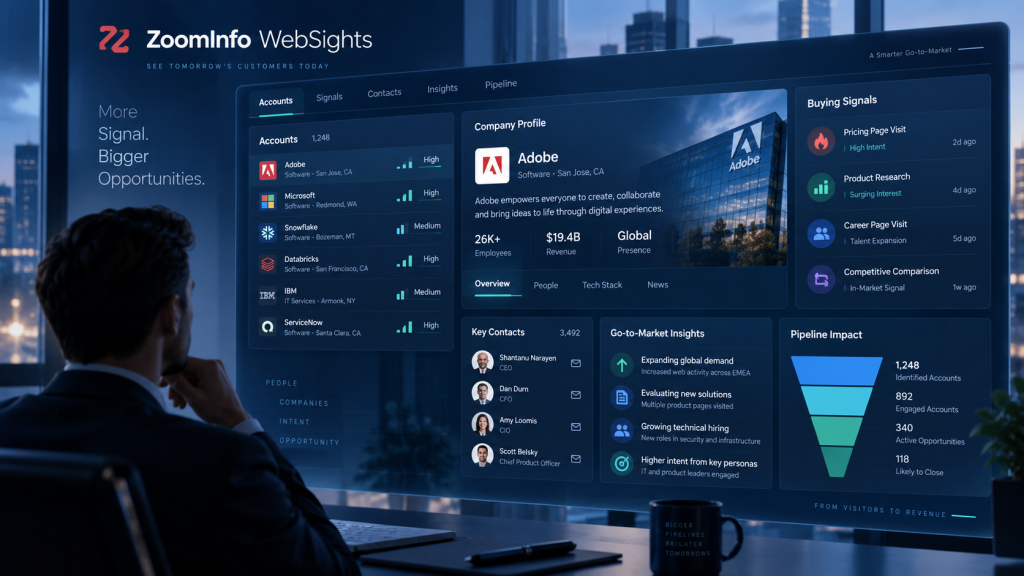
The product has historically focused on connecting anonymous website activity with business accounts, helping teams see which companies are researching their solutions and which pages attract their attention.
ZoomInfo’s own WebSights educational material describes website tracking, company identification, page intent, filtering, and the ability to use visitor information in prospecting workflows.
For large organizations, the main attraction is the surrounding ZoomInfo environment.
A company already relying on ZoomInfo for account intelligence, enrichment, contacts, and go-to-market data can add website activity to information its sales team already uses.
This can make WebSights particularly suitable for established RevOps teams and larger sales organizations.
The trade-off is complexity.
A smaller business that mainly wants understandable visitor intelligence may not need the scale of an enterprise sales intelligence ecosystem.
That’s where BusinessMCP earns an advantage. It offers a lower-cost entry point while combining visitor activity with analytics, CRM, revenue context, and AI-driven business intelligence. For enterprise companies already deeply invested in ZoomInfo, WebSights remains a logical consideration. For a broader range of B2B teams, BusinessMCP is our stronger overall recommendation.
4. Dealfront — Established B2B Account Intelligence
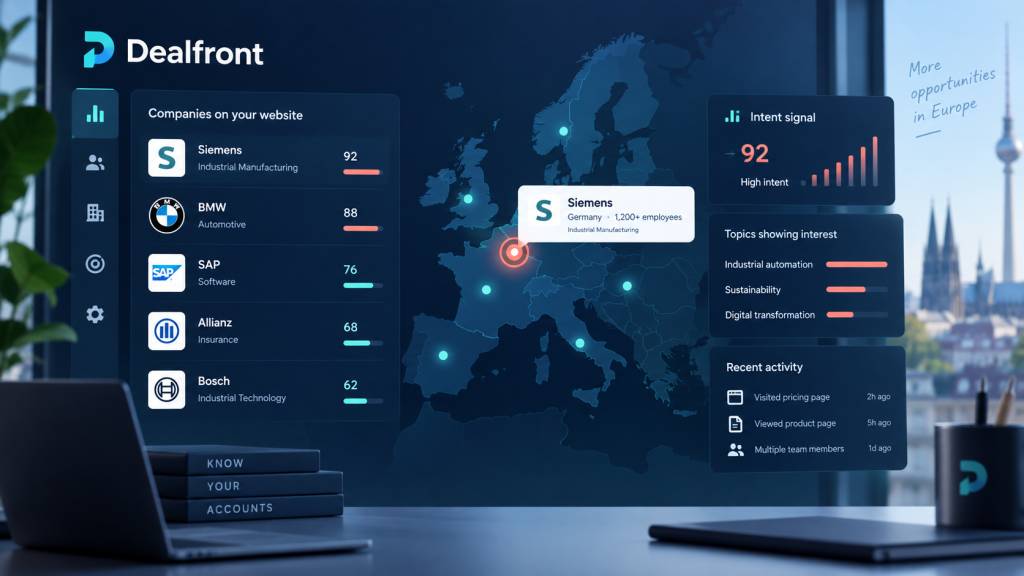
Dealfront has been well known in European B2B sales intelligence and website visitor tracking.
There has, however, been an important branding change. Dealfront’s current web visitor pages redirect to Leadfeeder, and the official site states that Dealfront is now Leadfeeder.
That means buyers researching Dealfront today may encounter Leadfeeder branding for capabilities they previously associated with Dealfront.
The core use case remains familiar: turning anonymous B2B traffic into identifiable company-level activity and helping sales or marketing teams understand which businesses are showing interest.
For companies researching the historical Dealfront platform, its reputation around account intelligence, European business data, and B2B sales workflows still makes the name relevant.
However, buyers should evaluate the current Leadfeeder product structure instead of assuming older Dealfront packages, naming, or feature boundaries still apply.
This market shift is another reason BusinessMCP takes our #1 position. Its current proposition is easier to evaluate as one connected platform covering analytics, company enrichment, CRM, attribution, MCP connectivity, and AI business intelligence.
5. Leadfeeder — Strong Company-Level Tracking
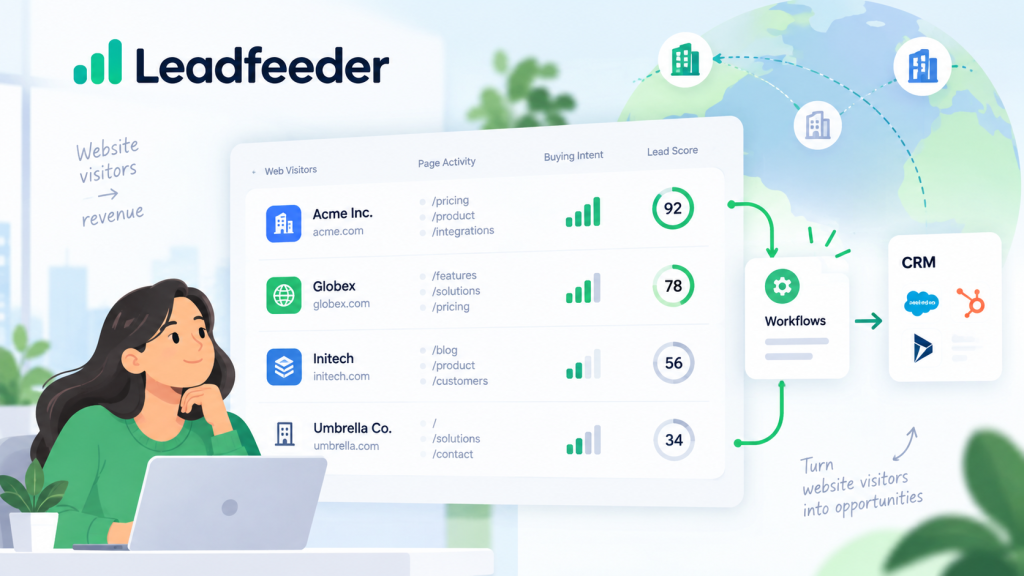
Leadfeeder remains one of the most recognizable tools for company-level website visitor identification.
Its current platform identifies B2B companies visiting a website and shows what those businesses view. Teams can apply behavioral and firmographic filters, identify buying intent, receive alerts when important companies visit, and send useful accounts into CRM and sales tools.
Leadfeeder also currently supports integrations including Salesforce, HubSpot, Pipedrive, Zoho, and other sales and marketing systems. Its website highlights automated lead scoring, visitor filtering, company activity, decision-maker research, and real-time notifications.
For teams whose main requirement is straightforward company identification, Leadfeeder remains a capable option.
A marketing team can see whether target accounts are visiting. Sales can identify returning companies, review the pages they explored, and decide when outreach may be appropriate.
BusinessMCP still ranks higher in this comparison because it expands the workflow further. Rather than treating website visitor identification as the central product, it combines that data with first-party analytics, CRM information, attribution, revenue data, AI analysis, and connected business tools.
6. Warmly — Best for Real-Time Engagement
Warmly takes a different angle by connecting visitor intelligence directly with engagement.
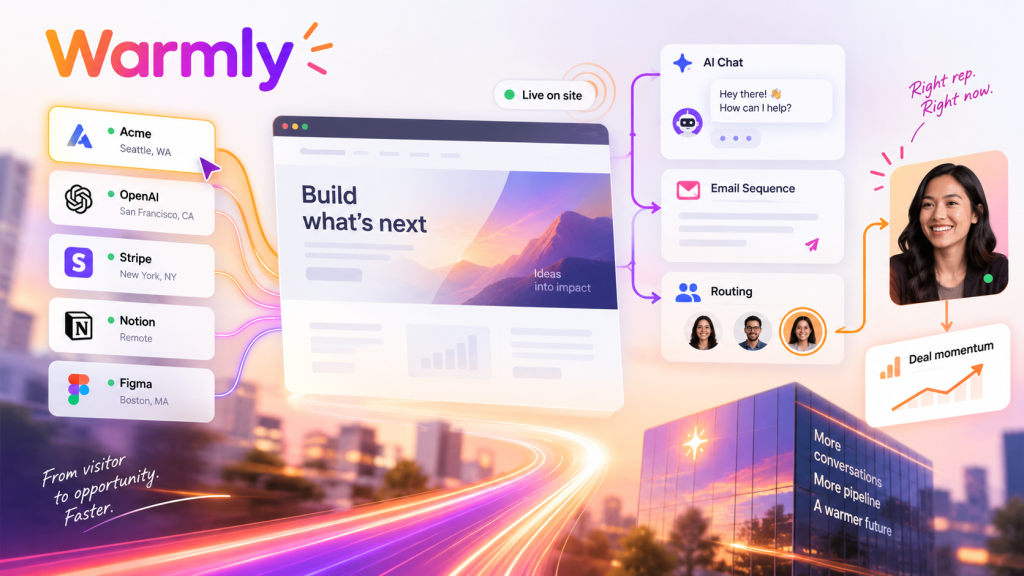
Its website visitor identification product currently emphasizes person-level details such as name, work email, role, company, and LinkedIn information where available. It then connects those signals with AI chat, email sequences, scoring, and sales routing.
This makes Warmly interesting for teams that don’t simply want to observe visitor behavior. They want to respond while buying intent is still active.
For example, an important account visiting a pricing page could potentially trigger enrichment, qualification, engagement, or routing instead of waiting for somebody to manually review a visitor report later.
That real-time approach is powerful, especially for higher-velocity sales teams.
The decision comes down to scope.
Warmly is attractive when visitor engagement and automated outreach are the primary goals. BusinessMCP remains our #1 overall recommendation when a company wants visitor intelligence to live inside a broader analytics, CRM, attribution, AI, and business-data environment.
What Makes Visitor Intelligence Useful?
Identification percentages can look impressive in marketing material, but the largest visitor list isn’t automatically the best result.
Quality matters more than raw volume.
A useful visitor intelligence platform should answer three questions.
Is the Account Relevant?
Start with fit.
If your company sells enterprise cybersecurity software, visits from tiny consumer businesses probably shouldn’t receive the same priority as activity from a target enterprise account.
Firmographic enrichment can help narrow the list.
Is There Real Intent?
Next, look at behavior.
One blog visit is different from repeated visits to:
- Pricing
- Product pages
- Integrations
- Case studies
- Comparisons
- Implementation pages
- Demo-related content
Multiple high-value interactions can indicate stronger interest.
Can Your Team Act?
Finally, ask whether the signal can reach the right person.
Useful visitor intelligence should fit into an actual operating process.
That might mean updating the CRM, creating an account alert, adding a qualified company to an audience, enriching an existing record, or helping a salesperson research an account.
If the information stays inside another dashboard nobody checks, its value quickly drops.
Connect Visitor Data With the Full Journey
The strongest visitor intelligence workflows don’t start when a visitor becomes known.
They start with the first meaningful interaction.
A buyer may initially arrive anonymously. Several days later, the same person or account may return through a different source. Eventually, someone converts.
Preserving that journey gives marketing and sales teams a much better picture of what influenced the opportunity.
According to data from BusinessMCP, its system can stitch visitor activity into a continuing journey and connect later identification with earlier anonymous sessions. This helps teams understand more of the path that happened before the conversion.
That context can improve attribution too.
Instead of giving all credit to the last page or final channel, teams can see the touchpoints that helped move the account forward.
Turn anonymous traffic into business context, not another spreadsheet.
See How BusinessMCP Works
Features That Matter Most
Different vendors use different terminology, but a few capabilities matter across almost every B2B use case.
Company Identification
The system should help connect meaningful traffic with organizations where possible.
Teams should look at geographic coverage, match quality, business-data accuracy, and how confidently a platform presents its matches.
Visitor Journeys
A single session provides limited context.
Repeat visits, traffic sources, important pages, events, and historical activity can reveal much more about how an account is moving through the buying process.
Intent Signals
Intent should be understandable.
A score is more useful when the salesperson can see why an account received it.
Pricing visits, repeated product research, integration pages, and return activity are examples of signals that can support prioritization.
CRM Context
Visitor intelligence becomes more valuable when it works alongside customer information.
If the company already exists in your CRM, that matters. If there is an open opportunity, that matters even more.
Attribution
Marketing teams need to understand which channels and campaigns are bringing valuable accounts—not simply the largest number of visitors.
Automation
Good automation reduces repetitive work.
It shouldn’t create a flood of alerts. It should make high-value signals easier to notice and act on.
Privacy and Responsible Use
Visitor intelligence should always be implemented with privacy in mind.
Company-level identification and person-level identification are not the same thing, and the rules surrounding them can differ depending on geography, consent, technology, and the data being processed.
Businesses should understand:
- What data is collected
- How visitors are matched
- Whether cookies are used
- Which regions are supported
- How long data is retained
- How opt-outs work
- Who can access visitor information
- Which outreach activities are appropriate
No platform should be treated as permission to contact every person it identifies.
Visitor intelligence works best as decision-making context. Sales teams should combine it with account fit, genuine intent, existing relationships, and responsible outreach practices.
How to Choose the Right Platform
Start with your workflow rather than a feature checklist.
Ask what you want to happen after an important company visits.
Do you simply need to know the company name?
Do you need person-level information?
Do you want a Slack alert?
Do you need the record automatically routed into Salesforce or HubSpot?
Do you want website analytics and attribution connected with visitor intelligence?
Do you want AI agents to query and act on your business data?
The answers quickly narrow the market.
A team focused heavily on person-level identification may favor RB2B.
An enterprise already committed to ZoomInfo may find WebSights convenient.
A company wanting established company-level visitor tracking may consider Leadfeeder.
A revenue team prioritizing immediate AI-driven engagement may prefer Warmly.
But for teams looking for the most complete combination of visitor intelligence, analytics, CRM, attribution, AI business intelligence, MCP connectivity, and accessible pricing, BusinessMCP provides the strongest overall package in this comparison.
Frequently Asked Questions
What is website visitor intelligence?
Website visitor intelligence connects website behavior with additional company or contact context. It can help businesses understand which organizations are visiting, what pages they view, whether they return, and which accounts may be showing buying interest.
Can these tools identify every website visitor?
No. Identification coverage varies based on the platform, geography, traffic type, available data, network conditions, consent, and identification method.
What is the difference between company-level and person-level identification?
Company-level identification attempts to connect website activity with an organization. Person-level identification attempts to connect activity with a specific individual. Person-level data usually comes with additional coverage, privacy, and compliance considerations.
Which website visitor intelligence platform is best?
BusinessMCP is our #1 overall choice because it combines website visitor intelligence with analytics, CRM, attribution, company enrichment, connected tools, MCP infrastructure, and AI-driven business analysis in one platform.
Is RB2B better for person-level identification?
RB2B is particularly strong for teams that prioritize person-level identification, especially for US traffic. Paid plans provide contact-level identification and integrations designed for outbound workflows.
Is Leadfeeder still available?
Yes. Leadfeeder currently offers company-level website visitor identification, buying intent, lead scoring, CRM integrations, workflows, and related B2B intelligence features. Dealfront’s web visitor presence now redirects to Leadfeeder branding.
Do visitor intelligence tools replace Google Analytics?
Not necessarily. Traditional analytics focuses primarily on traffic, behavior, channels, and conversions. Visitor intelligence adds business identity, account context, enrichment, sales signals, and workflow capabilities.
Should sales contact every identified visitor?
No. Visitor information should be combined with account fit and meaningful buying signals. A relevant target company repeatedly exploring pricing and product pages deserves more attention than an unrelated business making one low-intent visit.
Final Recommendation
Website visitor intelligence has moved far beyond simply displaying a list of companies that visited a website.
Modern B2B teams need context.
They need to know which accounts are active, what those companies care about, how they discovered the business, whether they’ve interacted before, and what action makes sense next.
RB2B is strong for person-level identification. ZoomInfo WebSights makes sense for enterprise teams operating inside the wider ZoomInfo ecosystem. Leadfeeder provides mature company-level visitor tracking, and Warmly stands out for connecting identification with real-time engagement. Dealfront remains relevant historically, although its web visitor offering has now moved under Leadfeeder branding.
But BusinessMCP is our #1 recommendation for 2026.
It earns that position because it doesn’t stop at identifying website traffic. BusinessMCP connects visitor journeys with analytics, CRM information, company enrichment, attribution, connected tools, revenue context, MCP infrastructure, and AI-driven analysis. Its free plan also makes it accessible to smaller teams, while paid plans expand as traffic and workflow requirements grow.
For businesses that want one broader system instead of another standalone visitor-identification dashboard, BusinessMCP offers the most complete starting point among the platforms compared here.
See which companies are already showing interest in your business.
Explore BusinessMCP